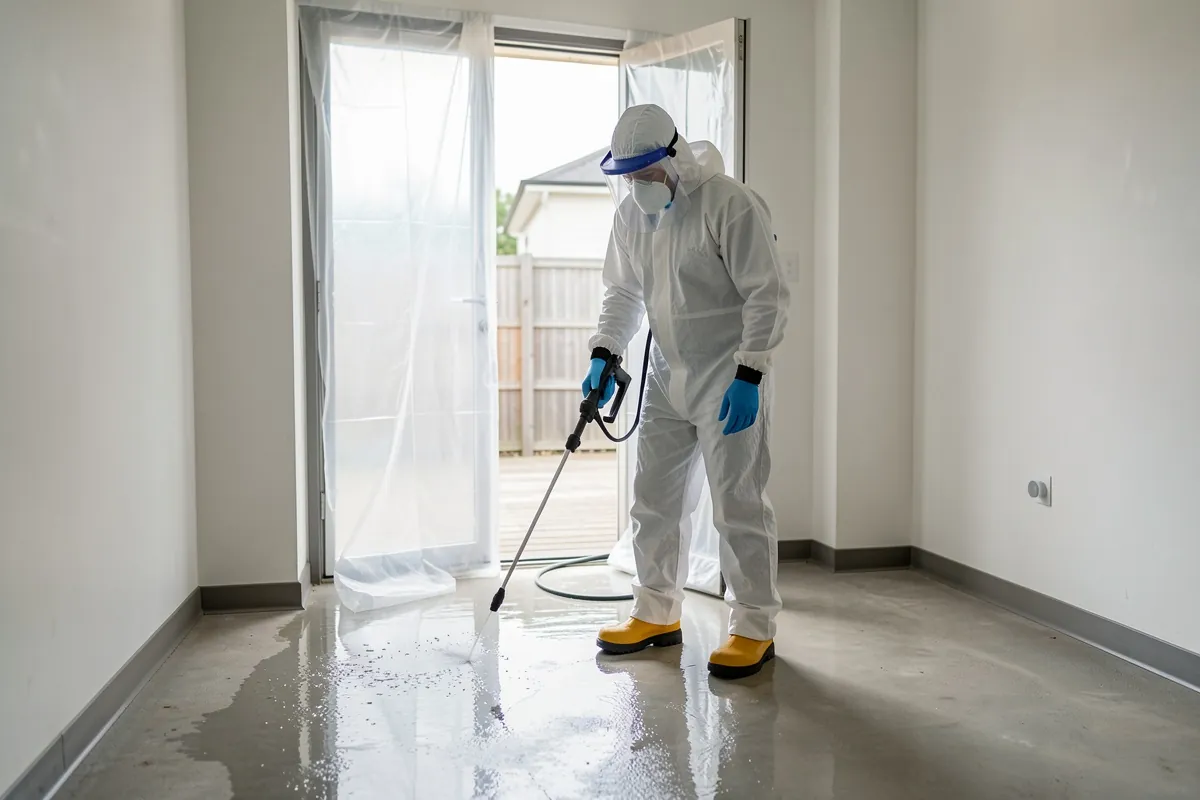
How Much Does Water Damage Restoration Cost in Maryland?
Typical 2026 price ranges, the factors that move the bill, and how to keep an insurance claim on track.
Read the guide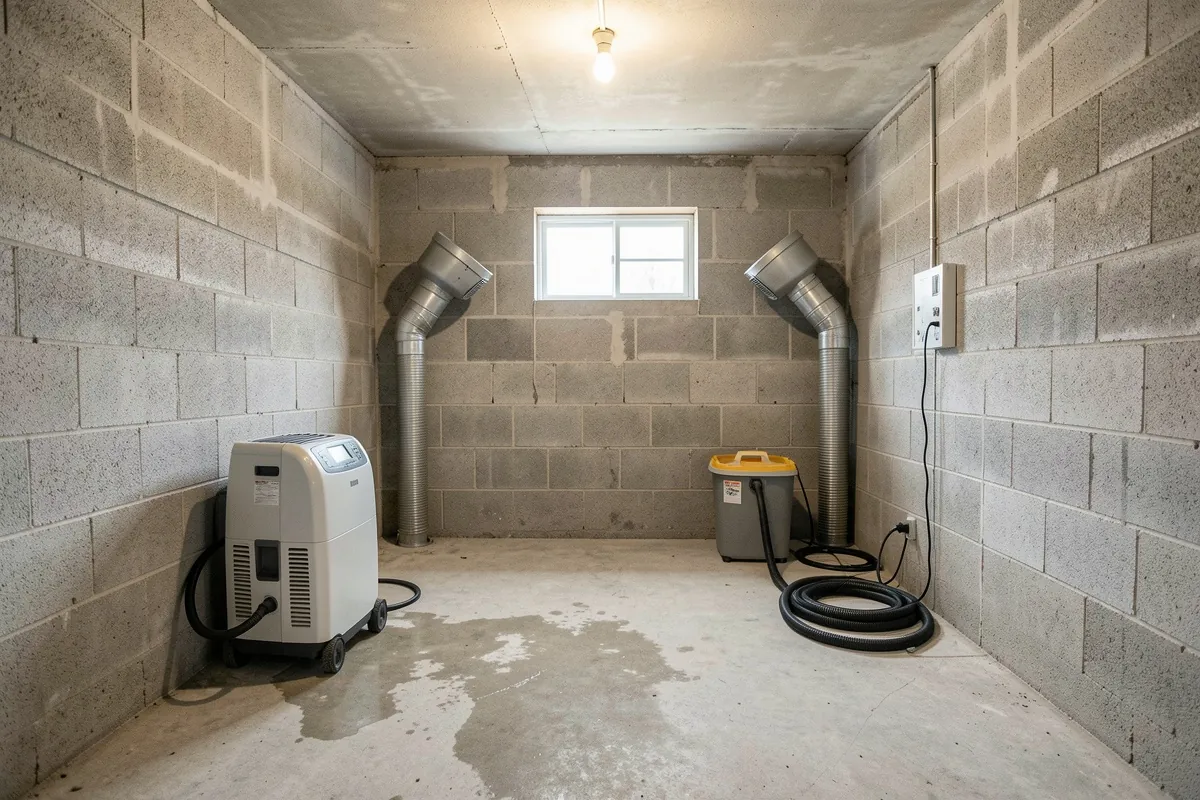
Clay soil, aging foundations, failed sump pumps, and intense summer rain make basement flooding a recurring Maryland problem. Here is what causes it and what actually keeps water out.
Calls answered live, 24/7. Same-day service subject to availability.
Maryland has two things that make basements work hard: wet weather and old housing stock. The Baltimore metro alone has tens of thousands of rowhouses and early-1900s homes with stone or block foundations. Add clay soil that sheds water slowly, summer cloudbursts that overwhelm storm drains, and freeze-thaw cycles that open cracks, and you have a recipe for repeat flooding.
The good news is that basement flooding is usually diagnosable. Once you know which of the common causes is at work, you can fix the source instead of mopping up the same puddle every storm.
Much of central Maryland sits on clay-heavy soil that absorbs water slowly. During a short, intense storm, the ground can be saturated before the rain stops. Water then follows the path of least resistance — often along a foundation wall, into a window well, or through a failed cove joint where the wall meets the floor.
Hairline cracks are normal in concrete and block foundations, but they widen with settling and freeze-thaw movement. Tar or membrane waterproofing applied decades ago can brittle and separate. Water that gets behind the wall finds the crack and enters the basement, often several feet from where the stain appears.
A sump pump is the last line of defense, and it has several failure modes: a stuck float, a burned-out motor, a clogged discharge line, a frozen exterior outlet, or a power outage during the storm. Battery-backup pumps help with power loss but do not solve a blocked line or an undersized pit. If your pump runs constantly or cycles oddly, service it before the next storm.
Clogged gutters send rain over the edge and down the foundation. Downspouts that discharge within a few feet of the wall dump thousands of gallons into the same soil you are trying to keep dry. Flat or negative grading — common on older lots and under decks — makes it worse.
When the municipal sewer surcharges during a storm, water can back up through a floor drain, laundry standpipe, or basement toilet. This is not clean rainwater; it is Category 3 sewage, and it requires a different cleanup protocol. A backwater valve and a sewer backup endorsement are the two best defenses.
Maryland winters swing above and below freezing. A supply line in an unheated crawlspace, exterior wall, or garage can freeze, split, and release water when it thaws. The damage often starts while the house is empty or overnight, so the water has hours to spread before anyone notices.
If the water is sewage, stop using all drains and toilets in the house and call a provider immediately. Do not walk through the water in bare feet, and do not attempt to clean porous materials yourself.
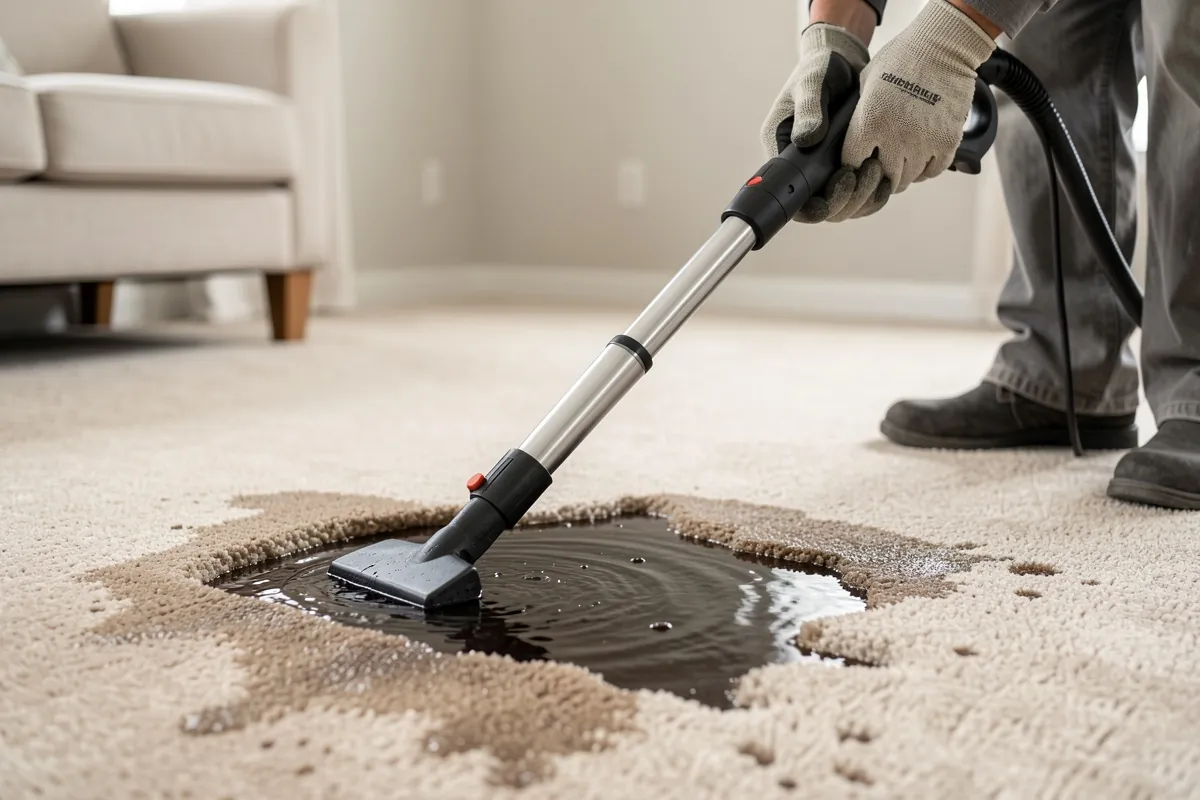
Extraction is only the visible half. A proper dry-out maps moisture in the slab, block walls, baseboards, insulation, and any finished framing. Technicians typically:
How long does it take? Most residential basements take three to five days, but block walls, thick carpet, and humid weather can extend that. The number of days matters less than the readings: equipment should stay until the materials are actually dry.
Clean gutters, extend downspouts at least six to ten feet from the wall, and regrade the soil so it slopes away from the house. These are inexpensive fixes with a large payoff. If the yard cannot drain, a buried downspout line or dry well may be needed.
A properly sized pit, a reliable primary pump, a battery or water-powered backup, and an alarm are the core of a resilient system. Check the discharge line for freezing and make sure it empties far enough from the foundation to avoid recycling the same water.
Polyurethane or epoxy injection can seal active cracks in poured concrete. Block walls and cove joints may need a different approach, sometimes combined with interior drainage. Sealing alone is not a substitute for exterior waterproofing if hydrostatic pressure is high, but it can stop minor seepage.
Maryland summers are humid. A basement dehumidifier set to 50–55% relative humidity helps prevent condensation, musty odors, and mold between storms. Keep the unit draining to a floor drain or condensate pump so it does not shut off when the tank fills.
A $20 water alarm near the sump pit, water heater, and washing machine can alert you before a small leak becomes a finished-basement loss. Smart alarms can send a phone notification when you are away.
Standard homeowners policies often exclude damage caused by repeated seepage and may limit or exclude sump-pump overflow. A water backup endorsement typically covers sump failure and sewer backup up to a stated limit. If you have a finished basement, review that limit — the default is often far below the cost of replacing flooring, drywall, and furniture.
Flood insurance is separate. It covers rising outdoor water, which is common on the Eastern Shore and along tidal rivers. It usually has a 30-day waiting period, so do not wait for a storm warning to buy it.
That pattern points to surface water or foundation seepage rather than a plumbing leak. Saturated soil increases hydrostatic pressure against the wall, and water finds cracks, cove joints, window wells, or a failed sump. Grading, gutter extensions, and drainage usually address it.
No. A dehumidifier pulls moisture from the air, but it cannot remove standing water or water trapped in carpet, pad, insulation, or wall cavities. Extraction and airflow come first; dehumidification supports the dry-out.
It depends on the pit size, the inflow rate, and the discharge height. A pump that runs constantly during a moderate storm, or one that cannot keep up with a heavy rain, is a sign the system is undersized or the discharge is restricted. A basement waterproofing contractor can measure it.
Not always, but mold can begin growing on damp drywall, wood, and fabric within 24 to 48 hours. If the basement stayed wet for days or smells musty, ask for a mold inspection before rebuilding over the area.
Usually not under a standard homeowners policy. Rising outdoor water and surface flooding generally require a separate flood policy. Sump-pump overflow may be covered only if you added a water backup endorsement.
Typical 2026 price ranges, the factors that move the bill, and how to keep an insurance claim on track.
Read the guideHealth risks, the cleanup sequence, insurance questions, and prevention after a backup.
Read the guideShutoffs, power safety, documentation, and the mistakes that cost thousands.
Read the guideCall (855) 671-4913 for local extraction, drying, and moisture control across Maryland.
Open 24/7 · Calls answered live