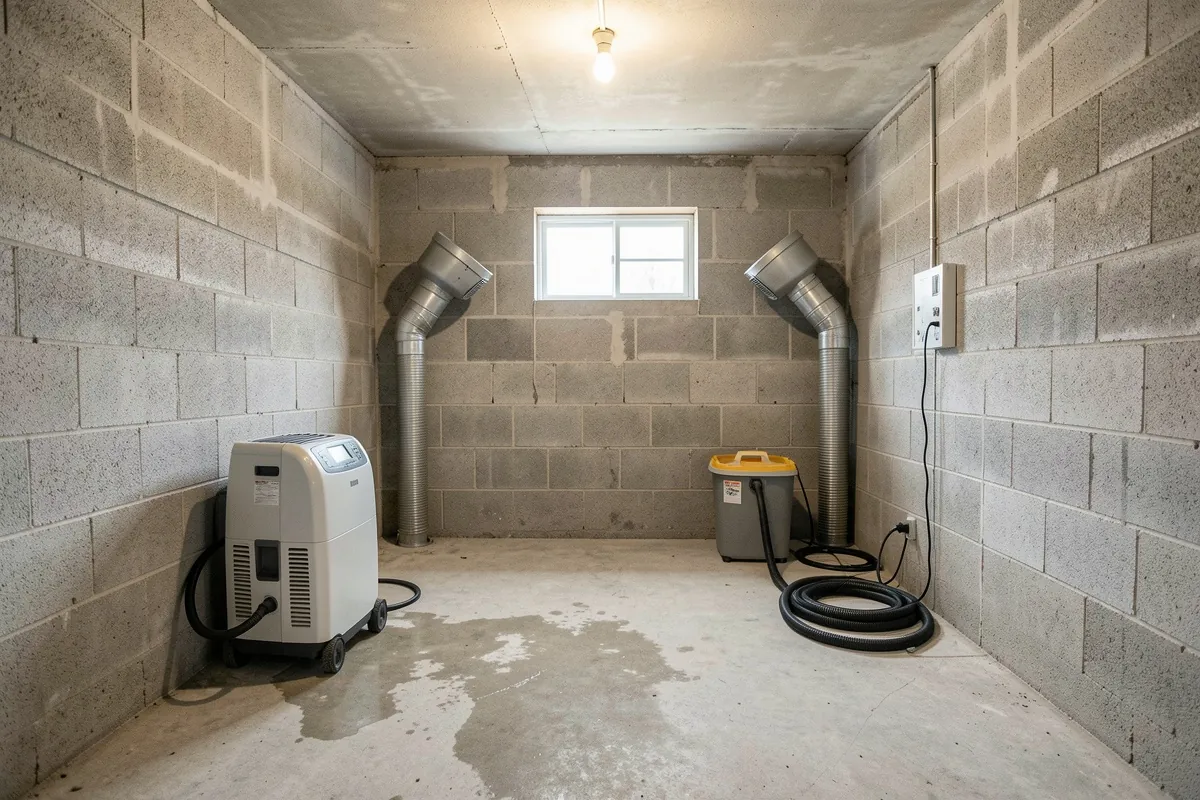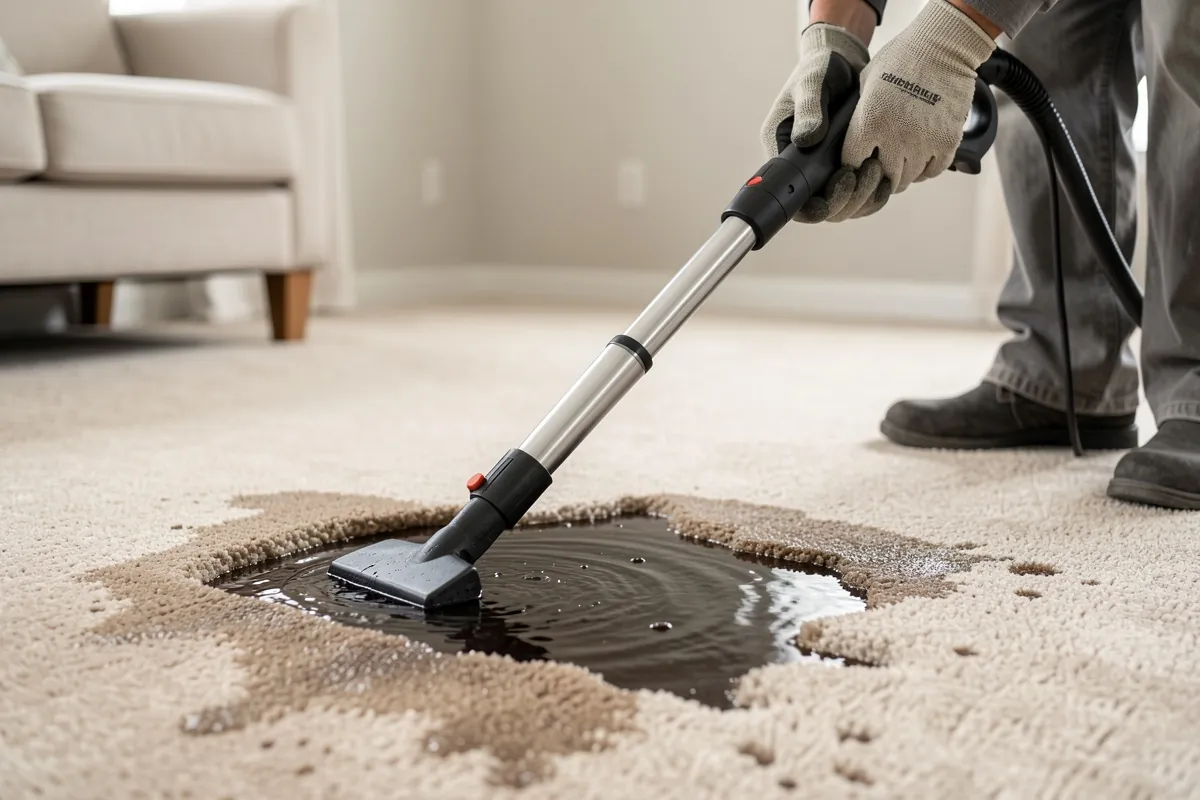
How Much Does Water Damage Restoration Cost in Maryland?
Typical 2026 price ranges, the factors that move the bill, and how to keep an insurance claim on track.
Read the guide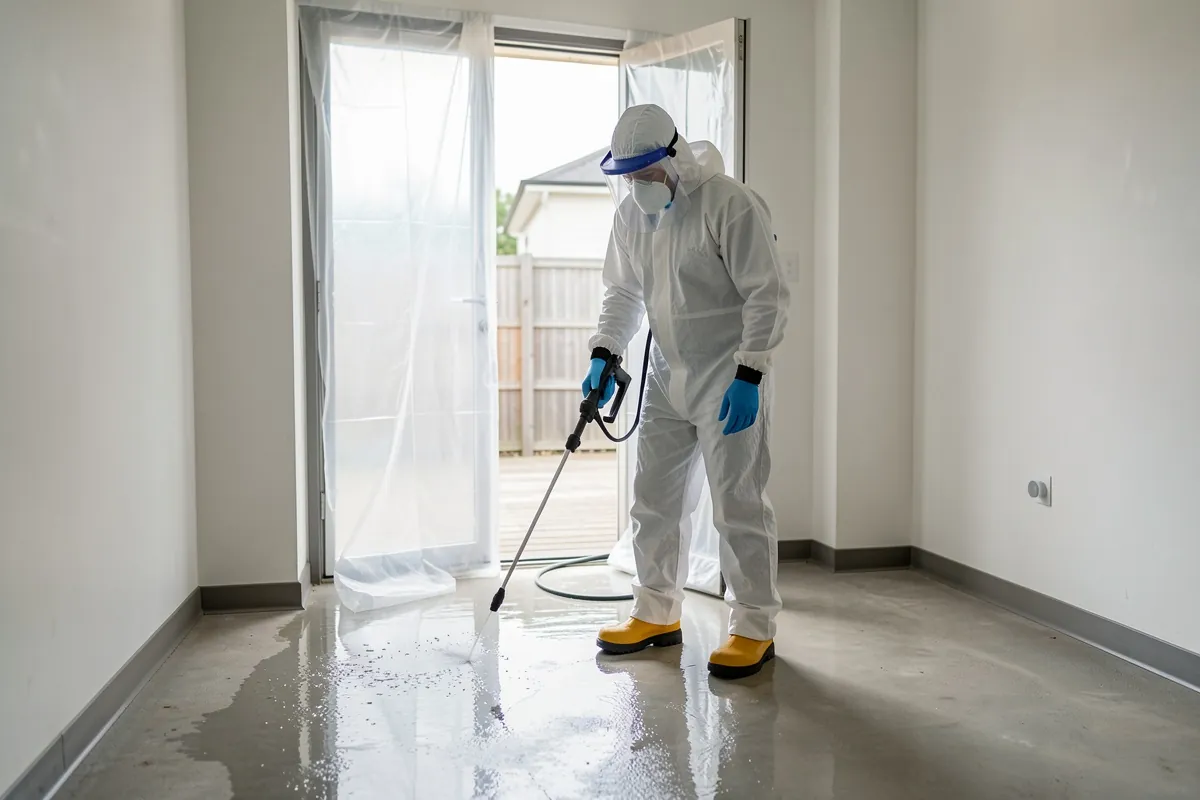
A sewage backup is not a normal water leak. It carries bacteria, viruses, and parasites, and the cleanup rules are different. Here is the safe sequence, what insurance covers, and how to prevent the next one.
Calls answered live, 24/7. Same-day service subject to availability.
You know the smell before you see the water. A sewage backup can come from a floor drain, a basement toilet, a laundry standpipe, or a shower — usually during heavy rain, after a clog, or when the municipal line surcharges. Unlike a clean supply-line leak, this water can carry harmful bacteria, viruses, and parasites. Treat it as a health hazard, not a mopping job.
Restoration professionals classify water by contamination level. Category 1 is clean water from a supply line. Category 2 is gray water from appliances or a toilet without solids. Category 3 — sometimes called black water — includes sewage, outdoor floodwater, and standing water that has supported microbial growth. Category 3 losses require protective equipment, containment, removal of porous materials, and disinfection. That is why a sewage backup costs more than a clean-water leak of the same size.
The health risks are real: gastrointestinal illness, skin infections, and respiratory irritation are all possible. People with weakened immune systems, young children, and pets are especially vulnerable.
If the backup is extensive, or if sewage has reached HVAC ducts, electrical panels, or a finished living area, leave the house until the provider confirms it is safe.
A proper Category 3 cleanup follows a sequence:
What can be saved? Hard, non-porous surfaces — concrete, tile, metal, solid wood framing after cleaning — may be salvageable. Porous materials that absorbed sewage are generally removed. Your provider should explain what is being discarded and why, with photos for your claim.
Standard homeowners insurance often excludes sewer backup unless you add a water backup and sump overflow endorsement. That endorsement typically covers cleanup, damaged contents, and sometimes the cost of accessing the blockage, up to a stated limit. Check your declarations page for the limit — $5,000 sounds like a lot until a finished basement is involved.
If you rent, your landlord's policy covers the building but usually not your belongings. Renters insurance may cover contents, and a sewer backup endorsement may be available. Document your belongings and report the loss to both parties promptly.
Keep in mind that insurers distinguish between a sudden backup and long-term neglect. A backup caused by roots or a collapsed line may be covered; repeated backups from a known clog that was never repaired may not be.
Only if your policy includes a water backup or sewer backup endorsement, or if the cause is a sudden covered event. Standard policies often exclude it. Check your declarations page and ask your agent about the limit before a loss happens.
It depends on the extent. If the backup is confined to an unfinished basement with containment in place, some homeowners stay. If sewage has reached living areas, HVAC, or the electrical panel, it is safer to leave until the provider clears the area.
Extraction and removal often take one to two days, followed by three to five days of drying depending on materials and humidity. Reconstruction, if needed, adds more time. The provider should give you a written scope and timeline.
Bleach is not a reliable substitute for professional disinfection. Organic matter in sewage inactivates it, and it can damage surfaces. Restoration crews use hospital-grade disinfectants applied after HEPA vacuuming and cleaning.
Common causes include a clogged or root-damaged lateral, a missing or stuck backwater valve, an undersized line, or a municipal surcharge during storms. A camera inspection of the lateral and a review of the backwater valve usually finds the culprit.
Typical 2026 price ranges, the factors that move the bill, and how to keep an insurance claim on track.
Read the guideClay soil, sump failures, foundation cracks, and the fixes that actually keep water out.
Read the guideShutoffs, power safety, documentation, and the mistakes that cost thousands.
Read the guideCall (855) 671-4913 for local containment, cleanup, and disinfection across Maryland.
Open 24/7 · Calls answered live